Positive Reinforcement Training for Reactive Dogs: A Kinder Way Forward
Updated: Oct 13

Your dog spots another dog across the sidewalk. Their body stiffens. Their mouth closes. Their ears shift. And before you can even take a breath, your peaceful walk suddenly feels like an emergency.
Maybe your dog barks, lunges, spins, freezes, growls, or pulls you toward the street. Maybe you feel your shoulders tense because you know people are watching. Maybe you have started planning your walks around quiet streets, empty sidewalks, or the hope that no one else will be out with their dog.
If that sounds familiar, please know this: you are not alone, and your dog is not “bad.”
Reactive dogs are dogs having big feelings in difficult moments. And positive reinforcement training gives us a kind, practical, and science-based way to help them feel safer, make better choices, and build skills for real life.
What Is Dog Reactivity?
Reactivity is a big emotional response to something in your dog’s environment.
For some dogs, the trigger is another dog. For others, it may be people, children, bicycles, scooters, delivery trucks, guests at the door, sounds outside the window, or activity on a busy Dallas sidewalk.
The behavior can look dramatic from the outside. Barking, lunging, growling, jumping, spinning, or freezing can be scary and embarrassing for the person holding the leash. But behavior is information. Your dog may be scared, overwhelmed, frustrated, excited, unsure, trying to create distance, or simply lacking the skills to cope in that moment.
At Wiggle Butt Academy, we do not look at reactive behavior as defiance. We look at the whole picture: what your dog is feeling, what they are communicating, what the environment is asking of them, and what support they need to be successful.
What Positive Reinforcement Means for Reactive Dogs
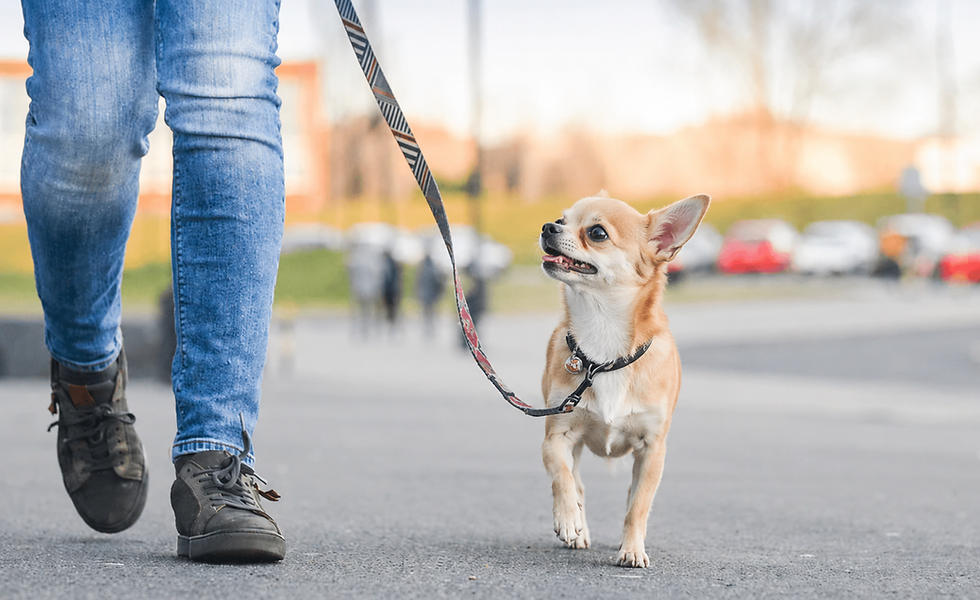
Positive reinforcement means we add something your dog values after a behavior we want to see more often. For many dogs, that is a small, delicious treat. But reinforcement can also be movement away from something scary, permission to sniff, play, access to a favorite person, or a chance to greet when greeting is safe and appropriate.
For reactive dogs, positive reinforcement is not about “bribing” your dog to stop barking. It is not about pretending the behavior is no big deal. And it is definitely not about letting your dog drag you through the neighborhood with no boundaries.
The work is much more thoughtful than that.
We create enough distance from the trigger so your dog’s brain and body are safe enough to learn. Then we teach useful skills, reinforce safer choices, and help your dog build a better emotional association over time.
For example, imagine your dog sees another dog across the street. Before their body tightens, they glance back at you. You mark that check-in with a cheerful word and offer a treat. With repetition, your dog begins to learn, “When I see another dog, good things can happen. I can look back at my person. I have options.”
That is both behavior training and emotional support.
Force-free training is not permissive training. It includes clear routines, thoughtful management, safety plans, boundaries, enrichment, and consistent practice. It simply rejects the idea that dogs need to be scared, hurt, or intimidated in order to learn.
Why Punishment Can Make Reactivity Worse
When your dog is barking or lunging, it is completely understandable to want the behavior to stop quickly. Those moments can feel stressful, public, and urgent. But leash pops, prong collars, choke chains, shock collars, and harsh verbal corrections can add pain, fear, or conflict to a dog who is already struggling.
Sometimes a dog becomes quieter because they are trying to avoid the correction. That can look like “success” on the surface. But quiet does not always mean calm. A dog who stops barking may still feel unsafe around the trigger.
In some cases, punishment can teach the dog that the appearance of another dog, person, child, or visitor predicts something unpleasant. That can make the underlying fear, frustration, or stress even bigger over time.
It can also suppress important communication. Growling, barking, freezing, and stiffening are all signals. We may not love those signals, but they tell us a dog is uncomfortable. If we punish the warning signs without helping the dog
feel better, we may lose valuable information while the discomfort remains.
Positive reinforcement training for reactive dogs focuses on why the behavior is happening, not just how loud or inconvenient it is. We want dogs with big feelings to have safer choices. And we want families to learn how to recognize those choices before things escalate.
Start With Distance, Not Obedience
One of the most helpful tools for reactive dogs is also one of the simplest: distance. If your dog cannot take food, cannot respond to a familiar cue, has a hard stare, is leaning into the leash, or is already barking and lunging, the trigger is probably too close for learning.
In that moment, the most productive next step is usually not asking for a sit. It is creating space.
Cross the street. Turn down a driveway. Step behind a parked car. Make a gentle U-turn. Wait in the apartment hallway until the other dog passes. Use a different exit when you can.
These choices are not failures. They are not “avoidance forever.” They are smart management decisions that protect your dog’s nervous system while you build skills.
Your dog’s threshold can also change from day to day. A dog may be able to watch another dog from 40 feet away on a quiet morning but need 100 feet at a crowded trailhead after a stressful week.
Heat, pain, lack of sleep, surprise encounters, overstimulation, and the number of triggers your dog has already seen that day can all affect their ability to cope.
That is why good reactive dog training is flexible. We are not asking your dog to perform like a robot. We are helping a living, feeling animal learn how to navigate the world more safely.
Learn the Early Signs
Reactivity rarely begins with the first bark. Most dogs show smaller signs before they explode. Learning those early signs gives you a chance to help before your dog is over threshold.
You may notice a closed mouth, hard stare, sudden stillness, ears shifting forward or back, weight moving forward, scanning, whining, panting, ignoring treats, or increased tension in the leash.
Those little signals matter.
When you see them, create distance and help your dog disengage. A practiced cue like “this way,” followed by calmly moving together and receiving a treat, can become incredibly helpful on busy sidewalks, near school pickup lines, or in apartment communities where surprise encounters happen fast.
The key is to practice these skills when things are easy first. Teach “this way” in your living room. Then in the yard. Then on a quiet sidewalk. Then around mild distractions. The middle of a meltdown is not the best time to introduce a brand-new skill. That is like trying to teach someone how to swim after they have already fallen into the deep end.
Skills That Make Real Life Easier
Reactive dog training should fit the life you actually live. A family with toddlers needs a different plan than a couple in a downtown high-rise. A dog who reacts at the front window needs different support than a dog who only struggles on leash. A dog who barks at visitors needs a different setup than a dog who gets overwhelmed by bicycles on the trail.
Still, a few foundation skills tend to help both ends of the leash.
Teach your dog that turning with you is rewarding. Practice cheerful U-turns indoors, then in your yard, then on quiet walks. This gives you a safe, familiar way to move away from triggers without dragging, scolding, or panicking.
Build a hand target so your dog has an easy job to do when they need help shifting attention. A nose-to-hand touch can be simple, grounding, and useful in many everyday situations.
Teach a “find it” cue, where you scatter treats on the ground for your dog to sniff out. Sniffing can help some dogs decompress, and it gives them something familiar to do instead of locking onto a trigger.
Reinforce calm moments that are easy to miss. If your dog sees a person at a comfortable distance, looks, and then sniffs the grass, reward that. If they glance at another dog and check back in with you, reward that. If they settle behind a baby gate while guests arrive, reward that too.
Training is not only about handling the hardest moments. It is about making the safer, calmer behaviors worthwhile often enough that they become part of your dog’s normal routine.
Management Is Part of Training
Good management is not cheating - it is one of the kindest things we can do for reactive dogs. If neighborhood dogs passing the front window cause repeated barking, window film may help. If walks are hardest at 5:30 p.m. when everyone is out, choose a quieter time when possible. If your dog struggles in tight spaces, avoid narrow trails or crowded patios while you are building skills.
Management prevents your dog from rehearsing reactions over and over. That matters because every big reaction can make the pattern stronger. It also helps your dog have more room to recover.
Enrichment at home can make a difference too. Sniffing games, appropriate chewing, food puzzles, decompression walks, and plenty of rest can all support your dog’s overall wellbeing. A dog whose day is packed with stress has less capacity to cope when something surprising happens.
We are not trying to bubble-wrap your dog from the world. We are giving them the support they need while they learn.
Progress Is Not Always a Perfectly Quiet Walk
Progress with a reactive dog does not always look like a silent, picture-perfect stroll through the neighborhood.
Sometimes progress looks like your dog recovering in 30 seconds instead of five minutes.
Sometimes it looks like noticing another dog from farther away without exploding.
Sometimes it looks like you spotting the early signs and turning away before your dog feels trapped.
Sometimes it looks like fewer hard moments because your management plan is working.
Behavior change is rarely a straight line. This is especially true for adolescent dogs, rescue dogs, fearful dogs, dogs with a history of stressful experiences, and dogs who have been practicing reactive behavior for a long time.A challenging day does not erase the progress your dog has made. It gives us information. Maybe the trigger was too close. Maybe the environment was too busy. Maybe your dog was tired, hot, sore, or already stressed.
It is also important not to compare your dog to the dog calmly greeting everyone on a brewery patio. Some dogs love that life. Others are happiest with quiet walks, sniffy trails, predictable routines, and a small circle of trusted people.
The goal is not to make every dog social with everyone.
The goal is to help your individual dog feel safer and function more comfortably in the life you share.
When Professional Support Matters
Please seek qualified help promptly if your dog has bitten, attempted to bite, redirects onto you or another pet, reacts around children, guards resources, or seems increasingly fearful or unpredictable.
A thoughtful safety plan may include leashes, gates, barriers, careful route choices, visual blocks, and muzzle training done gradually with treats and consent. A properly conditioned basket muzzle is not a punishment. It is a safety tool that can give everyone more breathing room while behavior support is underway.
A credentialed dog behavior consultant will look at the whole picture: your dog’s history, body language, health, daily routine, triggers, environment, and your family’s needs.
For pain, sudden behavior changes, or persistent anxiety, your veterinarian should be part of the conversation too. Behavior and health are deeply connected, and dogs cannot tell us with words when something hurts.
Support for Reactive Dogs in Dallas-Fort Worth
At Wiggle Butt Academy, our Fear Free Certified, force-free trainers support dogs and families across the Dallas-Fort Worth area through private lessons, training walks, day training, and virtual behavior consultations.
We build practical plans for real homes, real neighborhoods, real schedules, and real dogs with real feelings.
No shame. No scary tools. No quick-fix promises.
Just compassionate, science-based support that helps you understand your dog, advocate for their needs, and teach skills that make everyday life feel safer and more manageable.
Your dog does not need to love every dog, visitor, patio, sidewalk, or busy trail to have a good life. They need people who listen, create space, and teach with patience.
If you would like calm, compassionate guidance for your reactive dog, schedule a free phone consultation with Wiggle Butt Academy. We would be glad to help you create a plan that feels safer for your dog and more hopeful for your family.


